Black Friday 2026: brand protection guide
Prepare your brand for Black Friday 2026 with an integrated plan for brand bidding, digital scams, counterfeiting and unauthorized sellers.
67 days to Black Friday
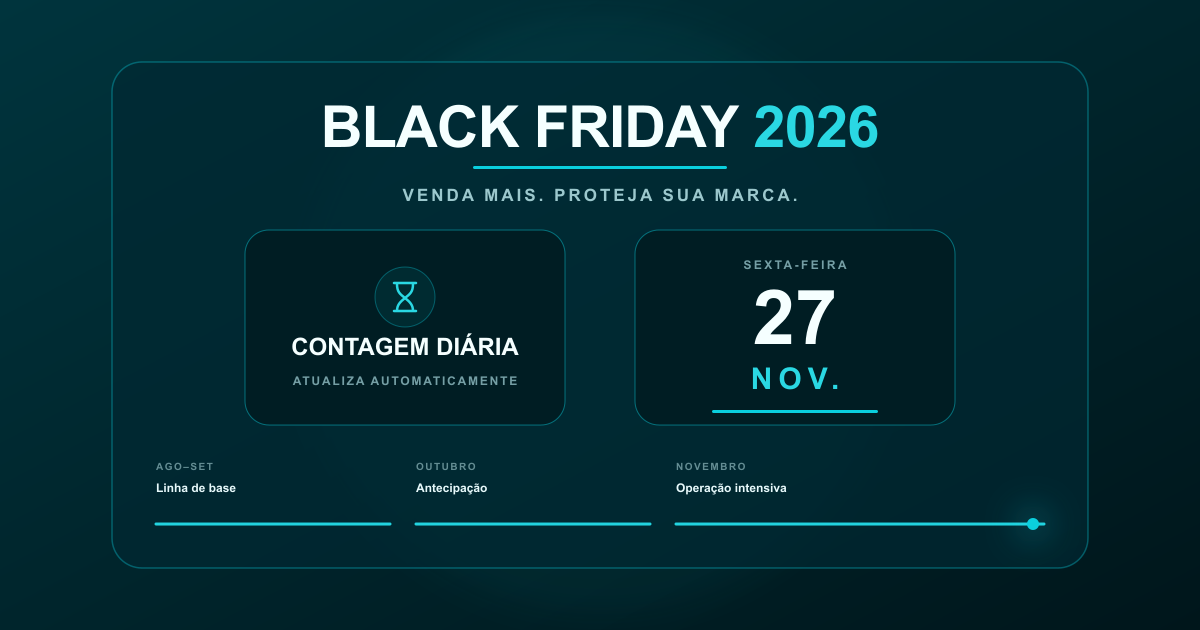
Brand protection for Black Friday 2026 should start between August and September, before campaigns and offers peak. The plan should connect paid media, domains, social networks, marketplaces, intellectual property and customer care so threats are detected, documented and addressed before consumers are affected.
recommended lead time
bidding, scams, Buy Box and counterfeiting
Black Friday 2026
When should Black Friday 2026 protection begin?
Work should begin in late August or early September. This creates a baseline of official campaigns, domains, profiles, sellers and offers before seasonal volume makes legitimate and fraudulent activity harder to separate.
Waiting until November compresses investigation and response. A useful report needs a URL, screenshot, date, responsible party, applicable right or policy and verification of the outcome.
| Period | Priority | Deliverable |
|---|---|---|
| 60–90 days before | Baseline | Official assets, sellers, campaigns and owners |
| 30–60 days before | Detection | Alerts, rules and classified threats |
| 15–30 days before | Testing | Evidence and escalation validated |
| Event week | Response | Intensive monitoring and verified removal |
| After the event | Learning | Recurrence, metrics and holiday plan |
Which risks belong in the same plan?
A single operation may buy the brand term, lead shoppers to a cloned website, capture the featured offer and sell counterfeit goods. The special separates four connected fronts so each one has a clear search intent, evidence standard and response.
- Brand bidding: competitors, affiliates and third parties intercepting branded demand.
- Digital scams: cloned sites, look-alike domains, false ads, profiles, phishing and fake support.
- Buy Box Protection: sellers and offers competing for the featured offer and pressuring price, margin and customer experience.
- Counterfeiting: fake goods, suspicious sellers, unauthorized asset use and misleading offers.
Why does the operation need to be integrated?
Media teams see auctions and traffic; e-commerce sees prices and sellers; customer care receives victim reports; security examines infrastructure; legal teams select the basis for action. A shared queue connects the occurrence, evidence, priority, owner and verified result.
The goal is not to maximize alert counts. It is to reduce exposure, confirm removals and recognize recurrence when the same operator changes a domain, account, creative or seller.
What do historical signals tell us?
Kaspersky reported weekly growth in Black Friday-themed messages from September 2024 and more than 198,000 spam messages in the first two weeks of November. In 2025, its global telemetry blocked 6,394,854 attempts to access phishing links involving stores, payments and banks from January through October; 48.21% targeted online shoppers.
Branddi identified more than one thousand fraudulent websites using Black Friday terms in October 2024. These figures do not predict 2026, but they show why the monitoring baseline must exist before peak demand.
How should this special be used?
Start with the risk already visible in your operation. Use the brand-bidding guide for paid results, the digital-scam guide for impersonation and phishing, the Buy Box guide for featured-offer pressure, and the counterfeiting guide for authenticity and trademark misuse.
When multiple fronts are active, bring them into one plan with shared priorities, owners, deadlines and metrics.
Sources
Continue through the Black Friday protection plan
-
Brand bidding on Black Friday: protect your branded terms
Learn how to monitor competitors, affiliates and ads on branded terms during Black Friday while distinguishing legitimate competition from misuse.
-
Black Friday digital scams: fake websites, ads and profiles
Build a plan against cloned sites, phishing, fake ads, profiles and support channels that misuse your brand on Black Friday.
-
Buy Box on Black Friday: protect sales and margin
Learn how to monitor sellers, prices, stock and offers competing for the Buy Box during Black Friday without treating every commercial dispute as a violation.
-
Black Friday counterfeiting: fake goods and suspicious sellers
Distinguish counterfeit goods, unauthorized sellers and channel diversion, preserve evidence and protect consumers and the Buy Box.
Shield your brand from digital threats across every channel
Connect Brand Bidding, Digital Scams, Buy Box Protection and Counterfeiting in one Black Friday operation.
Frequently asked questions
When is Black Friday 2026?
Black Friday 2026 falls on November 27. Because campaigns, branded searches and fraud attempts grow before the date, brands with many channels, products or sellers should begin preparing in late August or early September.
When should Black Friday brand protection begin?
The recommended starting point is 60 to 90 days before the event. This gives the team time to map official ads, domains, profiles, sellers, prices and assets, establish a baseline and test detection, evidence, prioritization and response workflows before peak demand.
What are the main Black Friday risks for brands?
The main risks include brand bidding on branded terms, fake ads and websites, phishing, fake support profiles, unauthorized sellers, Buy Box loss, counterfeit products and misuse of logos, product images and intellectual property. These threats can be connected across several channels in the same deceptive journey.
Do brand bidding, digital scams, Buy Box and counterfeiting need separate plans?
Each front needs specific criteria, evidence and responses, but governance should be integrated. A central queue helps identify when an ad, a look-alike domain, a fake profile and an irregular offer belong to the same operation instead of treating them as unrelated incidents.
What evidence should be collected before taking action?
Evidence should include the URL, date and time, complete ad or offer, advertiser or seller, landing page, price, brand assets used and the path to the destination. Preserving this context supports platform reports, legal escalation when appropriate and recurrence analysis.
Which teams should participate in the Black Friday operation?
Marketing and paid media track campaigns and traffic; e-commerce monitors prices, sellers and the Buy Box; customer care identifies consumer reports; security investigates infrastructure; legal and intellectual-property teams define the response basis; communications guides customers and partners. Owners, deadlines and escalation rules should be defined before the event.
How does Branddi help protect brands during Black Friday?
Branddi connects Brand Bidding, Digital Scams, Buy Box Protection and Counterfeiting monitoring to identify threats across search engines, ads, domains, social networks and marketplaces. The operation organizes evidence, prioritizes incidents, supports takedown actions and tracks outcomes and recurrence in one integrated view.
Does protection end on Black Friday?
No. Monitoring should continue through the weekend, Cyber Monday and the beginning of the holiday-shopping period. Teams should also confirm that reported content was actually removed and detect republication through new domains, profiles, ads or sellers.