Golpes Online
Internet and Social Media Scams: What the New York Bill Changes for Brazilian Brands
Branddi · Published on
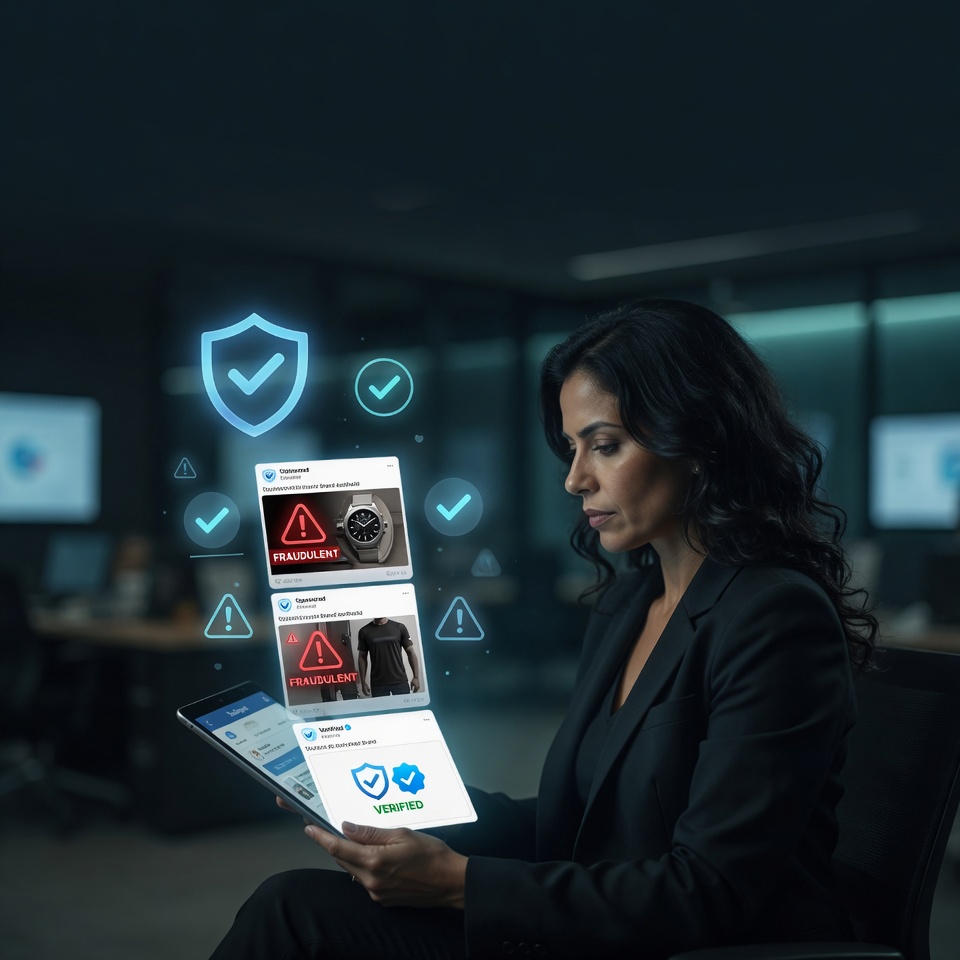
While you invest in branding and reputation, fraudsters use your brand name to apply internet scams at scale. Fake ads on Instagram, fraudulent profiles on TikTok, cloned sites promoted via Facebook — and platforms, so far, had no direct responsibility over this. In May 2026, New York changed the game by approving a bill that forces social media to verify advertisers and answer for fraudulent ads. In this article, you'll understand what this legislation proposes, how it impacts brands operating in Brazil, and what your company can do now to not depend exclusively on regulation.
What are internet scams and why they explode on social media
Internet scams are digital frauds that use fake sites, fraudulent ads, cloned profiles, and social engineering to trick consumers and steal data, money, or credibility. Although they have existed for decades, the explosion of social media transformed the scenario radically.
Platforms like Instagram, TikTok, and Facebook became the main product discovery channel for millions of consumers. This created a perfect opportunity for fraudsters: they create paid ads promoting false offers using the name, logo, and visual identity of real brands. The consumer trusts because they see the ad within a platform they consider safe, click, pay — and never receive the product. The real brand, which had nothing to do with the scam, inherits the reputational damage.
What the New York bill proposes against internet scams
The bill approved in New York in May 2026 introduces two structural changes in combating internet scams on social media:
Mandatory advertiser verification
Platforms are now required to verify the identity of any person or company that wants to run paid ads. This includes document validation, CNPJ or equivalent confirmation, and verification that the advertiser has the right to use the brand being promoted.
Accountability for fraudulent ads
If a proven false ad is run and the platform has not done the proper verification, it can be held legally responsible for the damage caused to the consumer and the brand. This changes the economic incentive: for the first time, not verifying advertisers becomes more expensive than verifying.
This approach is unprecedented on a legislative scale and signals a global trend. If New York, as a regulatory reference, can implement these rules, other markets tend to follow.
How internet scams directly affect Brazilian brands
Even if New York legislation doesn't apply directly to Brazil, internet scams that hit Brazilian brands follow exactly the same pattern. The impact is real and measurable:
- Loss of consumer trust — when a customer falls for a scam using your brand name, they associate the negative experience with your company, even if you have no responsibility.
- Increase in complaints and chargebacks — deceived consumers complain on Reclame Aqui, Procon, and social media, generating image crises that require immediate response.
- Traffic and sales diversion — fraudulent ads capture consumers who were ready to buy from you, diverting revenue to scammers.
- Inflated media cost — when fraudsters advertise with your brand, the ad auction becomes more competitive and CPC rises artificially.
- Long-term reputational damage — the perception that "brand X has many scams" spreads quickly and is hard to reverse.
In Brazil, where social media is the main product discovery channel, exposure to internet scams is even greater than in other markets.
Why waiting for regulation is not an option for brands
The approval of the New York bill is an important advance, but brands waiting for regulation to arrive in Brazil to act are running unnecessary risks. The reality is that the legislative process is slow, and fraudsters are fast.
In the current Brazilian scenario, there is no specific legislation that forces platforms to verify advertisers rigorously. The Marco Civil da Internet and the Consumer Defense Code offer bases for legal actions, but platform accountability is still discussed case by case, without a clear and definitive framework.
This means that while regulation doesn't arrive, the practical responsibility of protecting the brand falls on the company itself. Those who act proactively already reduce damage. Those who wait accumulate silent losses that grow every month.
How to protect your brand against internet scams today
Regardless of regulatory progress, there are concrete actions your company can implement immediately:
- Continuous monitoring of ads on social media — specialized tools track ads that use the name, logo, or identity of your brand on Instagram, Facebook, TikTok, and Google Ads, identifying fraud in real time.
- Agile takedown of fraudulent content — when identifying a false ad or fraudulent profile, immediately trigger the platform complaint channels. Removal speed is decisive to limit the reach of the scam.
- Monitoring of domains and fake sites — surveillance tools identify recently registered domains that mimic your brand name (.shop, .store, .promo), allowing action before the site goes into operation.
- Proactive communication with consumers — maintain clear official channels and regularly communicate which are your legitimate sites and profiles. Informed consumers fall less for scams.
- Documentation for legal actions — record all evidence of internet scams involving your brand. Screenshots, URLs, ad data, and monitoring reports strengthen any legal action.
The regulatory scenario in Brazil: what already exists and what is missing
Brazil already has legal instruments that can be used against internet scams, but none of them were designed specifically for the scenario of fraudulent ads on social media:
- Marco Civil da Internet — establishes rules on provider responsibility, but requires court order for content removal in most cases.
- Consumer Defense Code — protects the consumer against misleading advertising, but the accountability of the intermediary platform is still developing jurisprudence.
- General Data Protection Law — protects personal data, but does not directly address advertiser verification.
The global trend, accelerated by New York, is that more specific legislation will arrive in Brazil in the coming years. Brands that already operate with monitoring and active protection will be ahead when this happens.
Conclusion
The New York bill marks the beginning of a new era in platform accountability for internet scams. Although Brazil does not yet have equivalent legislation, Brazilian brands already suffer the same impacts: loss of trust, sales diversion, media cost inflation, and reputational damage. Protection cannot wait for regulation. Companies that act now — with monitoring, takedown, and documentation — are already reducing losses and shielding their reputation.
Want to protect your brand against internet scams that exploit your name on social media and paid ads? Contact the Branddi team right now via our contact page and discover how we can monitor, identify, and remove digital fraud before it reaches your consumers and your revenue.
I want my Branddi diagnosis →
Related articles
-
How to Remove a Fake App from Google Play and the App Store
Learn how to identify, document, and report a fake app on Google Play or the App Store through the correct channel for each type of violation.
-
Mother's Day in the beauty sector: when the competition starts before the date
The competition for Mother's Day intensifies as early as the beginning of the year, driving up media costs and requiring brands to plan ahead.
-
Tourism: last peak season recorded around 60,000 digital scam attempts linked to the sector
Branddi's survey shows an average of over 660 incidents per day during the 2025-2026 summer season.
-
6 in 10 Brazilians stop buying from a brand after being scammed, study shows
Did you know that 6 in 10 Brazilians stop buying from a brand after being scammed? In some cases, as Branddi's latest survey shows, this distancing tends to be permanent. Learn more.
-
Phishing surges 466%: is your brand the next target of AI-powered scams?
A new report reveals an unprecedented surge in phishing. Understand how this puts your revenue and reputation at risk and how to protect yourself with Branddi!