Site Falso
How to tell if a website is fake? A detailed Branddi guide
branddi · Published on · Updated on
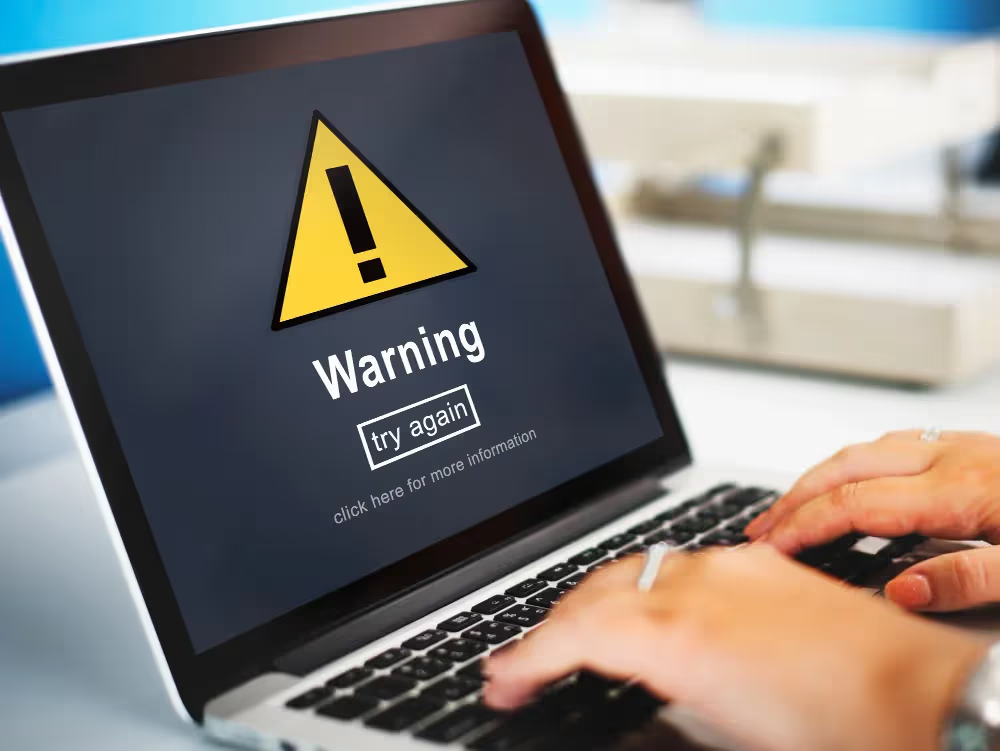
Browsing the internet can be both an informative and dangerous experience, especially when we come across websites that are not what they seem.
With the increase in cyber threats such as online fraud, phishing and fake websites, it is essential to know how to identify these traps before they become a problem. After all, fake websites are created to deceive, capture personal information, financial data or even infect your device with malware.
But how to protect your brand from these threats efficiently? Come with Branddi and check out our exclusive step-by-step guide!
Step-by-step guide to find out if a website is fake
To help you combat these threats, Branddi, a reference in brand protection, has developed a guide. Here we will reveal the main strategies for identifying and avoiding fraudulent websites.
With these tips, you will be able to protect your brand better, identifying and monitoring suspicious cases. Keep reading!
Check the URL
A website's URL is its digital identity. Therefore, fraudulent websites often use addresses that imitate those of legitimate companies, with small differences that may go unnoticed at first glance. This means that the site has a Secure Sockets Layer (SLL) certificate, essential for safe browsing.
In addition, it is worth paying attention to subtle spelling errors or substitutions: changing from an “m” to an “n” is enough to double-check.
Finally, be wary of URLs with unusual extensions or that try to imitate popular domains by adding extra terms.
Evaluate the design and spelling
A website's visual presentation is a crucial indicator of its legitimacy. For this reason, serious brands invest in quality design, including a professional layout, visual consistency and high-resolution images.
The presence of frequent errors, such as spelling and grammatical errors, broken links and slow loading, suggests a lack of professionalism and possible fraud. Therefore, when evaluating the legitimacy of a website, it is essential to pay attention to these visual and functional details.
Research the website and brand reputation
Before trusting a website, do some research into its reputation. To do this, add keywords like “scam” or “review” to the site name to find experiences from other users.
Platforms like Trustpilot and Reclame Aqui offer valuable insights into the reliability of websites and companies. Also use scanning tools like Google Safe Browsing: it's free and allows you to check whether a site is known to host malware or phishing.
Privacy policies and terms of use
Legitimate sites are transparent about their policies. In other words, the presence of detailed privacy policies and terms of use is a good indicator of legitimacy.
Suspicious payment methods
Reliable sites generally accept several payment methods, including credit cards and electronic payment systems. Therefore, be wary of sites that insist on direct money transfers as the only form of payment.
In addition, pay attention to the keys and means in which they are offered to carry out transactions, such as the account you will receive and the presence of a traceable CNPJ.
Contact and customer support
A ability to contact the company is essential. Therefore, legitimate websites offer several forms of contact, such as email, telephone and, sometimes, live chat. Remember: good customer support responds promptly and helpfully to queries.
Another point is the ease of integration between different platforms, such as the attachment of hyperlinks directing to social networks and marketplaces. That is, if the website is not present on any platform, it is worth suspecting its legitimacy.
How to prevent your brand from suffering fraud attacks
Hiring a brand protection service is essential for any company that wants to avoid fraud and protect its reputation in the market. After all, these threats continue to grow: in 2022 alone, Google removed more than 5 million false ads linked to a type of fraud. Thus, we identify and combat fraudulent threats, such as websites, domains and fake profiles.
In this way, by relying on experts who use advanced tools and work together with providers and platforms, the company ensures that its guidelines are strictly followed, minimizing risks and losses. Furthermore, brand protection strengthens consumer confidence by ensuring that they are purchasing authentic products and services.
Remember that precaution is your best defense against online threats: count on Branddi to shield your brand!
Related articles
-
Cybersquatting: what is it and how can it affect your brand?
Is your brand being used by others? Discover how cybersquatting diverts your customers, damages your reputation, and how to defend yourself!
-
Combosquatting: how to achieve full protection for your brand?
Your brand is vulnerable to scams. Learn how to fight combosquatting and protect your revenue and customer trust online.
-
Website cloning: how do these scams impact your brand?
Discover how website cloning impacts your brand, from loss of trust to legal risks, and how Branddi protects your business against this fraud!
-
DNS: how do scams exploit the domain name system?
Protect your brand against DNS fraud! Discover how criminals exploit the system and the essential measures to defend yourself.